Educational purpose
The 2026 Flooring Installation Cost Planner is built as an educational homeowner resource. It is not a flooring contractor, lead seller, quote broker, or installation company. The purpose is to help readers understand how flooring estimates are usually organized so they can ask clearer questions before spending money.
The site explains cost categories in plain English: material price, labor, waste, removal, subfloor prep, room size, transitions, trim, disposal, and finish details. It does not promise that one number will fit every home. Flooring work depends too much on local labor, product choice, room condition, and project scope for a single universal estimate to be responsible.
Why flooring costs vary
Flooring costs vary because floors are installed in real rooms, not on perfect sample boards. A clean rectangular bedroom is different from a main floor with hallways, closets, doorways, stairs, and several transitions. The same product can be easier or harder to install depending on the surface below it and the details around it.
Common cost drivers include room size, flooring type, layout direction, product thickness, pattern matching, old flooring removal, furniture handling, subfloor flatness, moisture concerns, baseboard work, disposal, and local labor rates. This resource groups those items into clear planning categories instead of treating the product price as the whole budget.
Material price vs installed price
Material price means the cost of the flooring product before installation. It may be shown per square foot, per box, per carton, or per roll. Material price is helpful for shopping, but it does not explain the full cost of finishing a room.
Installed price is more useful for budgeting because it connects the product to the work. A full installed price may include labor, underlayment, pad, adhesive, mortar, grout, trim, transitions, waste, delivery, cleanup, disposal, and minimum labor charges. Quotes become easier to compare when homeowners ask each installer to list what is included and what is not included.
Why labor cost changes
Labor changes because flooring materials are installed in different ways. Floating vinyl plank and laminate can be faster in simple rooms if the floor is flat and dry. Carpet requires stretching, seams, pad, tack strips, and sometimes stair work. Hardwood may need nailing, gluing, acclimation, board selection, sanding, or finishing. Tile can require layout planning, surface prep, mortar, grout, waterproofing, and curing time.
Labor also changes by the quality of preparation. A faster quote may skip items that another installer includes. A higher quote may include careful leveling, better trim work, cleaner disposal, or more difficult cuts. The method used here treats labor as its own category so readers can see whether a price difference comes from the product or from the work.
Waste and extra material
Waste is the extra material ordered beyond the exact measured room area. It is not always wasted in a careless sense. Extra material covers cuts, board selection, tile layout, damaged pieces, pattern matching, and future repairs. The amount needed depends on the room shape, installation pattern, flooring type, and installer guidance.
This resource encourages homeowners to treat waste as a normal planning line, not as a hidden surprise. Ordering too little can delay the project or create color matching problems later. Ordering too much can waste money. A written quote should explain how the installer calculated extra material.
Subfloor prep
Subfloor prep is reviewed separately because it can change the success of the finished floor. New flooring generally needs a base that is flat, clean, dry, and structurally sound. If the subfloor has dips, humps, moisture, loose panels, cracks, old adhesive, or damaged areas, prep may be needed before installation.
Some issues are visible before the quote. Others appear only after old flooring is removed. Responsible planning leaves room for this possibility. Homeowners should ask how hidden damage is priced, whether approval is needed before extra work begins, and whether repairs will be documented in writing.
Why local quotes still matter
Online planning can help homeowners understand cost categories, but it cannot inspect a home. Local quotes still matter because installers can measure the rooms, check transitions, identify access problems, inspect the existing floor, and explain which product is suitable for the space.
Local labor rates also change by market. A number that seems reasonable in one city may not match another area. The best use of this resource is to prepare for better conversations with local professionals, not to replace those conversations.
How to use this resource responsibly
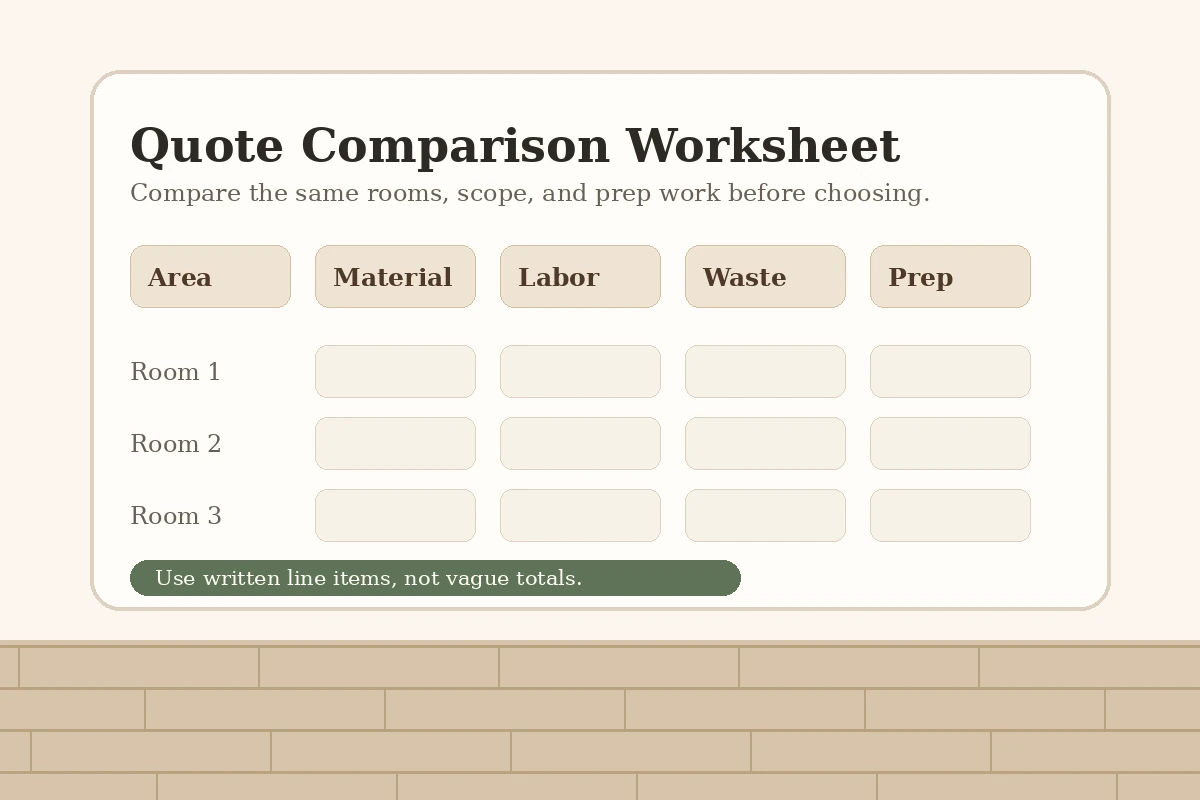
Use the planner to organize questions before requesting estimates. Compare quotes by the same rooms, same flooring type, same removal scope, same prep assumptions, and same finish details. Ask for written line items when possible. If one quote is much lower, check whether it excludes removal, subfloor repair, underlayment, transitions, or cleanup.
FlooringCostPro is mentioned here as a plain-text reference name because the main planner page links to two related educational resources. This methodology page does not include any external backlink. For this site, the main rule is simple: plan with clear categories, then confirm the real project scope with local quotes.
Return to the Flooring Installation Cost Planner 2026 to review the main homeowner guide and use the budget worksheet.