Flooring price is not just material price
Many flooring budgets start with one simple number: the price printed on the product display. That number matters, but it does not explain the full project. A floor that looks affordable by the carton can become expensive after labor, delivery, removal, underlayment, trim, waste, subfloor prep, and room complexity are added.
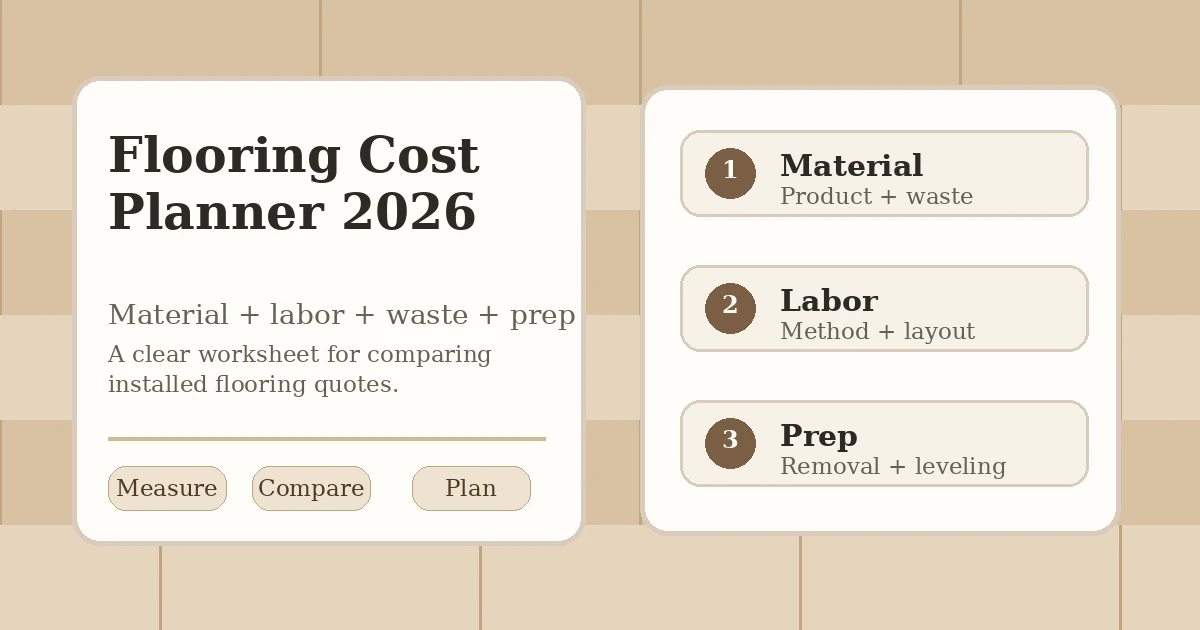
In 2026, homeowners should compare flooring projects by installed cost, not material cost alone. Installed cost is the closer planning number because it reflects the work needed to turn boxes of flooring into a finished surface. This planner focuses on product, labor, waste, preparation, and finish details so homeowners can read quotes more clearly.
What changes flooring installation cost in 2026
Flooring cost changes because every project has a different mix of material, layout, and site conditions. A simple square bedroom is usually easier to install than a first floor with hallways, multiple doorways, closets, a fireplace hearth, and floor height changes. Wet rooms can need moisture checks. Older homes can reveal soft spots, squeaks, uneven panels, or previous flooring layers after removal begins.
Material choice
Tile, hardwood, vinyl plank, laminate, and carpet use different products, tools, adhesives, trims, and installation methods.
Room condition
Uneven subfloors, damaged underlayment, moisture, old glue, and cracked tile can increase prep time.
Project scope
Stairs, closets, baseboards, transitions, furniture moving, disposal, and tight cutting areas can change the final total.
The best estimate separates these pieces instead of showing one unexplained lump sum. A clear quote makes it easier to see whether the price is driven by premium material, difficult labor, or extra preparation.
Material-only cost vs installed cost
Material-only cost is the price of the flooring product itself. It may include planks, tiles, carpet, or boards, but it often excludes the work and supplies needed to complete the job. Installed cost is broader. It can include labor, adhesives, fasteners, underlayment, padding, grout, trim, stair parts, old flooring removal, disposal, floor leveling, moisture barriers, and minimum service charges.
Before comparing contractor quotes, homeowners can review the average flooring installation cost per square foot to understand how material, labor, waste, and prep work affect the final project range.
| Cost category | What it usually means | Why it matters |
|---|---|---|
| Material-only price | The visible price of the flooring product before installation items. | Useful for product shopping, but incomplete for a project budget. |
| Installed price | Product plus labor, basic supplies, waste, and installation work. | Better for comparing full project estimates. |
| Prepared and finished price | Installed price plus removal, repairs, leveling, trim, transitions, and disposal. | Closest to the amount many homeowners actually need to budget. |
When a quote looks low, check what is missing. It may exclude removal, floor prep, furniture moving, disposal, baseboards, or transitions. The goal is not to choose the cheapest number. The goal is to compare the same scope.
Labor cost by flooring type
Labor is the part of a flooring estimate that changes most from one material to another. Some floors click together over a suitable underlayment. Others require mortar, grout, adhesive, sanding, nailing, stretching, seam work, or detailed layout planning. Labor can also change by region, installer experience, room shape, stairs, old floor removal, and the amount of preparation needed before the new floor begins.
Labor is often the part of the estimate that changes the most, so checking flooring labor cost per square foot can help separate material price from installation price.
| Flooring type | Labor complexity | What can raise labor |
|---|---|---|
| Vinyl plank | Low to moderate in simple rooms | Uneven subfloor, many cuts, glue-down method, stairs, trim work |
| Laminate | Low to moderate | Moisture concerns, underlayment needs, door trimming, transitions |
| Carpet | Moderate | Seams, stairs, pattern matching, furniture, old carpet removal |
| Hardwood | Moderate to high | Nailing, glue, acclimation, board selection, sanding, finishing |
| Tile | High | Leveling, layout, waterproofing, cutting, mortar, grout, curing time |
A labor line should be read with the room details in mind. A low square foot labor number may not include stairs, baseboard work, furniture handling, or removal.
Tile installation cost factors
Tile is often one of the most labor-sensitive flooring choices. The installer has to plan the layout, prepare the base, set the tile, cut around obstacles, grout the surface, and allow curing time. Wet areas may need waterproofing, uncoupling membranes, or special attention to transitions. Homeowners should ask whether the estimate includes surface prep, grout type, movement joints, and disposal.
Vinyl plank installation cost factors
Vinyl plank can offer a wood-look surface with easier maintenance and faster installation in many rooms. Click-lock vinyl plank can be efficient when the subfloor is flat, clean, and dry. Cost surprises are often below the surface. Dips, humps, old adhesive, moisture, or loose panels may require leveling or repair before installation.
Hardwood installation cost factors
Hardwood installation depends on wood type, board width, installation method, and site conditions. Solid hardwood may need acclimation and is often nailed to a suitable wood subfloor. Engineered hardwood may be nailed, stapled, glued, or floated. A good quote should state whether it includes finishing, shoe molding, thresholds, and floor protection.
Laminate installation cost factors
Laminate is usually more budget-friendly than many hardwood options and can install quickly in simple spaces. Most laminate floors float over underlayment, but they still need a flat and stable base. Moisture, door jamb trimming, transitions, baseboard gaps, and expansion space can affect both appearance and price.
Carpet installation cost factors
Carpet cost depends on carpet grade, pad, room shape, seams, stairs, and removal of old carpet. Seam placement matters because poor seam locations can show faster in high-traffic areas. Homeowners should ask whether the quote includes pad, tack strips, transitions, removal, disposal, and furniture moving.
Waste factor and extra material
Waste factor is the extra flooring ordered beyond the exact measured square footage. It covers cuts, mistakes, layout direction, damaged pieces, pattern matching, and future repairs. A basic square room may need less extra material than a room with angles, closets, diagonal layout, or a patterned product. Tile and hardwood can also need careful batch or dye-lot matching, which makes extra material more useful.
Ordering too little can create delays or color mismatch. Ordering too much wastes money. Measure carefully, confirm the installer recommendation, and keep a small labeled amount for future repairs if storage space allows.
Use length times width, then add closets and connected spaces.
Extra material helps cover cuts, damage, and pattern direction.
Flat, dry, solid floors reduce surprises during installation.
Ask about baseboards, shoe molding, thresholds, and transitions.
Quotes should include the same rooms and the same work.
Subfloor prep and removal cost
Subfloor prep is one of the easiest parts of a flooring project to underestimate. New flooring needs a stable base. If the existing floor is uneven, soft, wet, loose, cracked, or covered with old adhesive, the installer may need to repair or level the surface before continuing. This work can protect the new floor and reduce the risk of gaps, movement, squeaks, cracked grout, or visible imperfections.
Removal cost also varies. Carpet is usually easier to remove than glued flooring or tile. Multiple flooring layers can add time. The quote should say what is being removed, how waste will be handled, and whether repairs discovered after removal are included or billed separately.
Good quote question
Ask this before choosing an installer: “What floor prep is included, what is excluded, and how will you price hidden problems discovered after removal?”
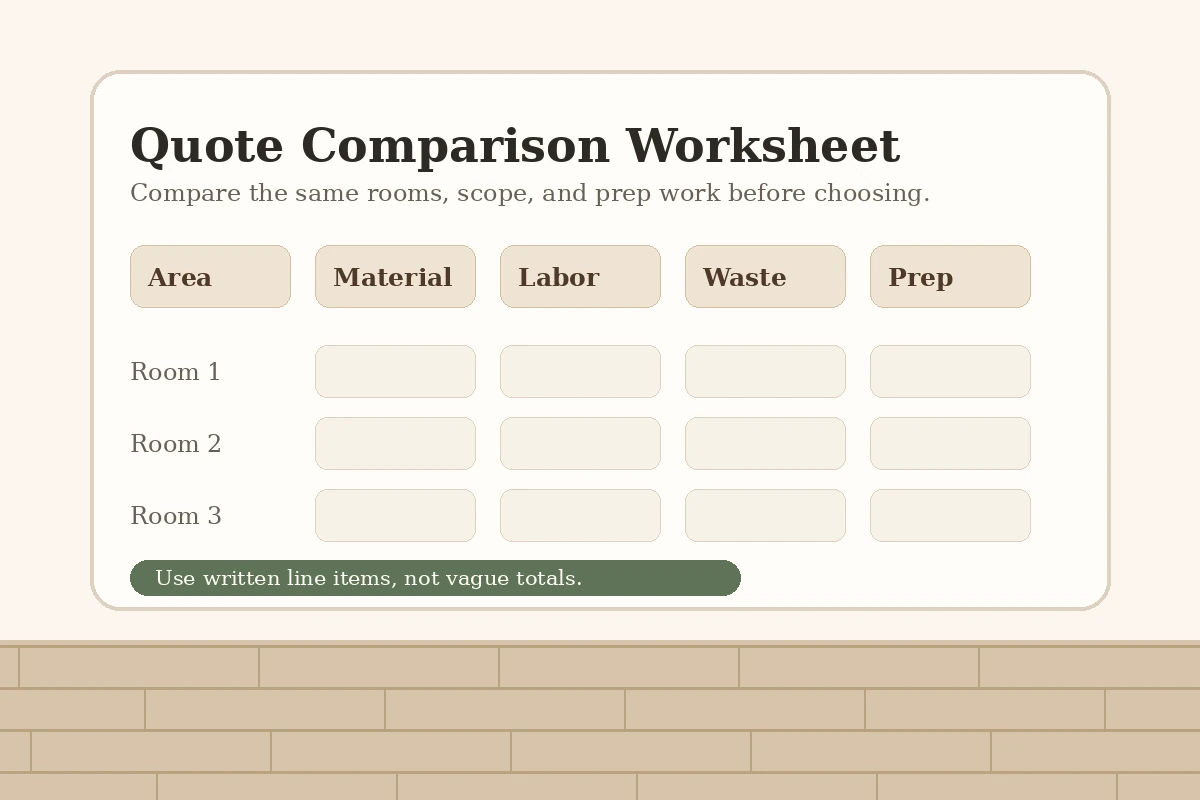
Quick installed-cost worksheet
Use this simple worksheet to understand how the parts of a flooring budget fit together. Replace the starter numbers with your own quote details.
1,000 sq ft example budget
A 1,000 square foot project is a useful example because it shows how quickly small line items become large totals. The table below is not a national quote. It is a planning example that shows the math homeowners can use when comparing bids. Your home may be lower or higher depending on material, location, access, layout, and prep.
| Line item | Example planning method | Why it matters |
|---|---|---|
| Material | 1,000 sq ft plus waste multiplied by product price | Waste-adjusted area is often higher than measured room area. |
| Labor | 1,000 sq ft multiplied by installation labor | Labor changes by flooring type, room layout, and installer scope. |
| Removal | Quoted separately or included in the labor scope | Old flooring type can change time and disposal needs. |
| Subfloor prep | Allowance or itemized repair line | Hidden issues are common after old flooring is removed. |
| Finish details | Transitions, trim, stairs, door cuts, and cleanup | Small details affect whether the finished floor looks complete. |
Homeowner checklist before asking for quotes
Better quotes start with better project details. Before calling installers, collect enough information so each company prices the same work.
- Measure each room separately, including closets and hallways.
- List the flooring type you prefer and any backup option.
- Take photos of current flooring, transitions, stairs, and problem areas.
- Write down whether old flooring should be removed.
- Ask whether furniture moving is included or separate.
- Check for moisture concerns in basements, bathrooms, and laundry rooms.
- Ask how subfloor repairs are priced if hidden damage appears.
- Confirm whether baseboards, shoe molding, and transitions are included.
- Ask whether the quote includes delivery, disposal, and cleanup.
- Compare the same rooms, same materials, and same prep scope.
FAQ
Is material price the same as installed flooring price?
No. Material price usually covers the flooring product only. Installed price can include labor, waste, trim work, old flooring removal, subfloor repair, underlayment, transitions, disposal, and job minimums.
How much extra flooring should homeowners order?
Many homeowners plan extra material for waste, cuts, damaged boards, pattern matching, and future repairs. The right allowance depends on room shape, layout, flooring type, and installer guidance.
Why does tile labor usually cost more than floating floors?
Tile installation often requires layout planning, mortar, waterproofing in wet areas, grout work, leveling, cutting around fixtures, and longer curing time. Floating vinyl plank or laminate is usually faster in simple rooms.
Should old flooring be removed before getting quotes?
Not always. It is often better to let installers inspect the existing floor first so they can quote removal, disposal, leveling, moisture concerns, and subfloor repair accurately.
Can one flooring cost estimate work for every home?
No. Flooring estimates change by material, room size, stairs, trim, doorway cuts, subfloor condition, moisture issues, local labor rates, and whether the contractor includes removal and disposal.
Use the planner responsibly
This resource is meant to help homeowners read estimates with more confidence. It should not be used to pressure installers into unrealistic pricing or to assume every home can be priced from a simple chart. The most useful flooring budget is the one that matches your room measurements, flooring choice, site condition, and written scope.
For a clear explanation of how this site compares flooring estimate categories, visit the methodology page.